Imagine
Harnessing the Power of the Sea
- >5 Log Reduction microbial in 30 seconds
- 100 times more effective than bleach
- Replaces hazardous chemicals
- Non-corrosive and non-toxic
- Tasteless, odourless and extends shelf life
- Halal and Organic Certified
- Allows for water and brine recycling
Let us introduce you to Eco-Shield for Water - Slightly Acidic Electrolysed Water.
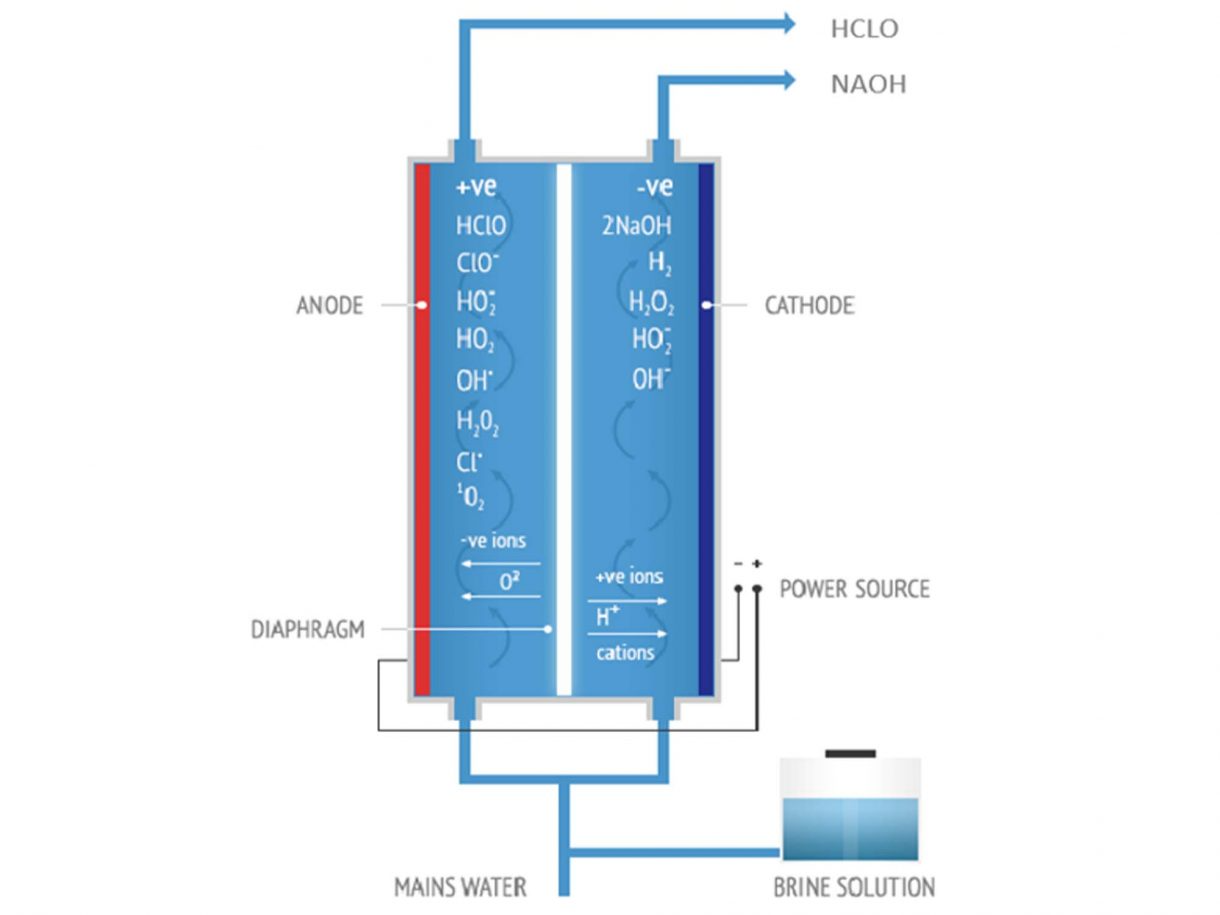
In a world where hygiene and sustainability are no longer optional, Slightly Acidic Electrolysed Water (SAEW)—commonly known as Anolyte – emerges as a transformative solution for disinfection and sanitation. Generated through a sophisticated electrochemical process using just salt, water, and electricity, Anolyte produces Hypochlorous Acid (HOCl), a powerful, naturally occurring antimicrobial compound. This solution mirrors the disinfecting mechanism used by the human immune system and offers an efficient, chemical-free way to eliminate bacteria, viruses, fungi, spores, and biofilms across a broad spectrum of environments.
Why Haven’t I Heard of It?
Slightly Acidic Electrolysed Water, which is not new technology but we are unique in our ability to produce a sanitiser on demand and on an industrial scale. It is not popular with chemical companies that want to sell you drums of sanitisers every month at high margins.
The secret is a carefully controlled process to create Slightly Acidic Electrolysed Water, better known as hypochlorous acid, not to be confused with hypochlorite, as it has low odour and taste. Unlike hypochlorite, hyphochlorous acid doesn’t produce toxic and carcinogenic trihalomethanes, making it a safe alternative. In fact, hypochlorous acid is the natural defence used by our own white cells to fight infection and kills microorganisms at the DNA level.
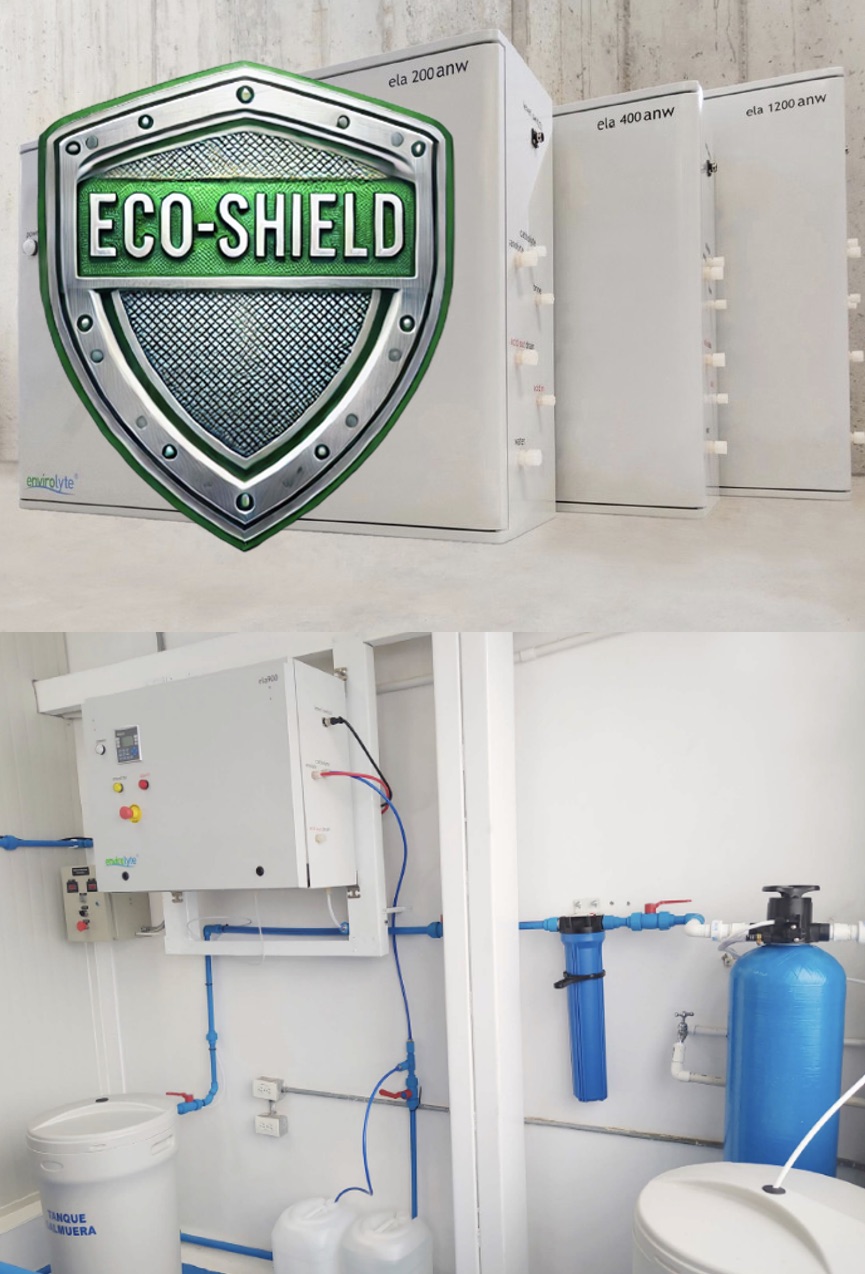
Key Benefits
- Chemical Free
- Active against
- Bacteria
- Viruses
- Mould and Spores
- Removes biofilms
- Approved for Organic Food Production
- USDA approved for food contact for
- Red Meat
- Poultry
- Water Processing
- RTE Meat
- Seafood
- Compatible with Halal Processing
- Tasteless and Odourless
- Reduces Carbon Footprint
What can Eco-Shield Water Sanitation be used for
Slightly acidic electrolysed water (SAEW) is a next-generation sanitiser that not only destroys bacteria, viruses, and fungi but also breaks down stubborn biofilms that protect them. It works safely on fresh produce, meat, poultry, and seafood to cut bioload and extend shelf life, while in horticulture, hydroponics, and greenhouses it keeps plants and irrigation systems clean and disease-free.
Its reach is vast – creating self-sanitising ice, powering CIP systems in dairy and beverage plants, and ensuring safe recycled water. SAEW also protects livestock, hatcheries, and aquaculture through treated feed water, while defending public health by eliminating pathogens in pools, cooling towers, and hot water systems. On farms, SAEW can be safely applied to sanitise sheds and equipment while treating livestock drinking water, reducing infections and mortality rates, and driving higher yields—all with zero risk to the animals.
This is but the tip of the iceberg, and if microbial control is needed from healthcare to the oil industry or from waste water to pharmaceutical – SAEW provides a solution.
Clean, powerful, and sustainable, SAEW is redefining hygiene across food, farming, and industry.
Technology
What Is Slightly Acidic Electrolyzed Water (SAEW)?
Slightly acidic electrolyzed water (SAEW) is an advanced, eco-friendly disinfectant produced using just salt, water, and electricity. Through a process called electrochemical activation, this solution creates a powerful antimicrobial agent known as hypochlorous acid (HOCl)—a compound naturally produced by the human immune system to fight pathogens.
How It Works
- Electrochemical Activation (ECA):
An electric current is applied to a low-concentration salt solution inside a membrane-based electrolysis cell, producing a slightly acidic solution rich in hypochlorous acid (HOCl) through controlled electrochemical reactions, where precise pH regulation is critical to maximize HOCl formation and ensure disinfection efficacy. - Generation of Hypochlorous Acid:
This process rearranges the molecules to create a mildly acidic solution (pH 5.0–6.5), rich in HOCl, which is up to 100 times more effective than traditional chlorine bleach. - Immediate Disinfection:
The resulting solution kills bacteria, viruses, fungi, and spores on contact—without leaving toxic residues or requiring rinsing. It is approved for food contact as well as surface sanitation.
Not the Same as Saltwater Chlorinators — And Here’s Why It Matters
Although both systems use salt (NaCl) and electricity, slightly acidic electrolyzed water (SAEW) is fundamentally different from traditional saltwater chlorination systems—and significantly more effective and safer.
Key Differences in Technology and Output
- Disinfectant Type and pH Control
- Saltwater chlorinators generate sodium hypochlorite (NaOCl), a chlorine compound with a high pH (typically 10–13). At this pH, the dominant species is hypochlorite ion (OCl⁻), which is far less effective as a disinfectant.
- SAEW systems are engineered to maintain a slightly acidic pH (5.0–6.5), where hypochlorous acid (HOCl) is the dominant species—up to 100 times more effective than OCl⁻ in penetrating and neutralizing pathogens.
- Cell Design and Separation
- SAEW is produced in a membrane-separated electrolysis cell, which keeps acidic and alkaline streams apart, allowing for precise control over pH and disinfectant composition.
- Saltwater chlorinators typically use undivided cells, resulting in mixed, less stable disinfectants with reduced microbial efficacy and more chemical byproducts.
Why Sodium Hypochlorite Poses Hazards!
Sodium hypochlorite, while commonly used, it is known to produce harmful byproducts, especially when it reacts with organic matter:
- Chlorinated Organic Compounds (e.g., THMs, HAAs)
When NaOCl interacts with organic material (such as proteins, fats, or biofilm), it can form trihalomethanes (THMs) and haloacetic acids (HAAs)—both of which are classified as potential carcinogens and are tightly regulated in water and food safety standards. - Chlorine Gas (Cl₂)
If NaOCl is accidentally mixed with acids, it can release toxic chlorine gas, which is dangerous to inhale and can cause severe respiratory harm. - Corrosive to Equipment: High-pH hypochlorite solutions can degrade stainless steel, rubber seals, and other materials over time.
- Environmental Concerns: Residual chlorine compounds can harm aquatic life and increase chemical oxygen demand (COD) in wastewater systems.
Why SAEW Is Superior
- ✔️ Generates High-Efficacy HOCl at the ideal pH range
- ✔️ Non-toxic and safe for humans, animals, food, and the environment
- ✔️ Non-corrosive to most surfaces and equipment
- ✔️ Produced on-demand, eliminating chemical storage risks
- ✔️ Biodegradable with no harmful residues or byproducts
Eco-Friendly
Why Slightly Acidic Electrolysed Water (SAEW) is the Eco-Friendly Choice
Slightly acidic electrolysed water (SAEW) delivers powerful sanitation with a fraction of the environmental impact of traditional chemicals. Produced simply from water, salt, and electricity, it leaves behind nothing but water after use—no residues, no toxins, no pollution. SAEW not only protects people, animals, and plants but also reduces reliance on hazardous chemicals, antibiotics, and fungicides, supporting healthier ecosystems and more sustainable farming.
The Eco-Friendly Advantages of SAEW
- Low carbon footprint – made on-site with water, salt, and low-voltage electricity
- Cuts delivery emissions – eliminates transport costs and carbon footprint tied to chemical supply chains
- Zero toxic residues – breaks down into pure water, leaving no harmful by-products
- Removes hazardous chemicals – replaces chlorine, quats, and other harsh disinfectants
- On-site generation – eliminates single-use packaging and chemical handling risks
- Safe wastewater – no chemical contamination when released into drains or the environment
- Water recycling – enables safe reuse of process water in food production and agriculture
- Worker- and animal-friendly – no toxic fumes, chemical burns, or animal risks
- Sustainable farming & aquaculture – supports healthier herds, crops, and yields by reducing the need for antibiotics and fungicides while protecting ecosystems
With SAEW, businesses can achieve world-class hygiene while cutting their carbon footprint and chemical reliance. Clean, green, and sustainable—it’s the smarter way to sanitise.
Benefits
Benefits of Slightly Acidic Electrolysed Water (SAEW)
• Powerful sanitiser – rapidly destroys bacteria, viruses, fungi, and biofilms
• Food-safe – extends shelf life of fresh produce, meat, poultry, and seafood
• Eco-friendly – leaves no toxic residues, breaking down into pure water
• Low carbon footprint – generated on-site from water, salt, and electricity
• Eliminates transport emissions – no chemical deliveries required
• Reduces hazardous chemicals – replaces chlorine, quats, and other disinfectants
• Supports sustainable farming – lowers reliance on antibiotics and fungicides
• Water recycling – makes process water safe to reuse
• Worker- and animal-safe – no toxic fumes or risk to livestock
• Versatile – effective across food production, agriculture, aquaculture, healthcare, and public facilities
• Cost-effective – reduces spend on chemicals, storage, transport, and compliance
• Regulatory friendly – safe for HACCP, organic, and halal-certified processes
Industries
Food & Beverage Processing
Applications of Slightly Acidic Electrolysed Water (SAEW) in Food Processing Plants
Surface sanitisation
- Disinfects work surfaces, benches, conveyor belts, and equipment in contact with food.
Clean-in-Place (CIP) systems
- Effectively cleans and sanitises internal pipelines, tanks, and closed systems without harsh chemicals.
Produce washing
- Safely removes bacteria, pesticides, and residues from fruits and vegetables, extending shelf life.
Tool and utensil disinfection
- Provides fast, residue-free sanitation for knives, cutting boards, trays, and containers.
Air and environmental fogging
- Controls airborne bacteria and viruses in production and packing rooms using mist or fogging systems.
Worker hygiene stations
- Used as a gentle and effective hand sanitiser for employees entering processing zones.
Packaging sanitation
- Sprayed on outer packaging, crates, and cartons to reduce contamination risk during handling and transport.
Drain and floor sanitation
- Reduces microbial load in high-risk floor drains and wet areas without corrosive chemicals.
- Removes stains and odours
Biofilm control
- Helps break down and prevent biofilm formation on surfaces and in water systems.
Cooling water and wash water treatment
- Keeps water lines clean and safe for direct or indirect food contact applications.
Recycling rinse water
- Enables safe reuse of process water in wash cycles, reducing water consumption and waste.
Sanitation & CIP
Sanitation Applications
- Disinfects food-contact surfaces including benches, conveyors, cutting boards, and tools
- Sanitises production equipment between batches without the need for harsh chemicals
- Cleans high-touch areas in processing zones such as control panels, handles, and doors
- Fogged or sprayed in processing rooms to reduce airborne bacteria and odours
- Used as a no-rinse sanitiser for packaging materials, crates, and containers
- Disinfects staff boots, gloves, and hands to support hygiene in critical zones
- Safe for direct application to raw produce, meats, or dairy products to reduce microbial load
- Used in wash-down of floors, drains, and wet areas to prevent biofilm formation
Clean-in-Place (CIP) System Applications
- Replaces chemical sanitisers in CIP cycles for tanks, piping, fillers, and mixing systems
- Safe for stainless steel, rubber seals, and sensitive processing equipment
- Leaves no chemical residues, reducing the need for extended rinsing cycles
- Supports real-time sanitation with on-demand generation and immediate application
- Maintains consistent microbial control without altering product taste, colour, or quality
- Reduces CIP cycle time, water consumption, and overall chemical use
- Compatible with automated CIP systems and programmable logic controllers (PLCs)
Red Meat Industry
Animal Husbandry & Livestock Management
- Drinking water disinfection – Keeps water lines and troughs clean, reducing the risk of waterborne diseases in cattle, sheep, pigs, and poultry.
- Air and surface disinfection in sheds and pens – Fogged or sprayed to reduce airborne bacteria, odours, and ammonia in housing environments.
- Equipment and pen cleaning – Sanitises feeders, drinkers, gates, tools, and handling equipment safely and effectively.
- Footbaths and entry point hygiene – Used to sanitise boots, clothing, and hands to prevent the introduction of pathogens into animal zones.
- Wound and hoof care – Safe for topical application on minor wounds or as a hoof soak to reduce infections.
Benefit: Improves animal health and welfare, reduces antibiotic use, and enhances biosecurity.
Abattoirs and Meat Processing Plants
- Carcass rinsing and spray chilling – SAEW can be applied directly to carcasses post-slaughter to reduce microbial load, improving shelf life and food safety.
- Conveyor, table, and tool sanitation – Disinfects knives, saws, hooks, cutting boards, and other tools in direct contact with meat.
- Clean-in-Place (CIP) systems – Used in pipes, tanks, and closed systems to replace harsh chemical sanitisers with a residue-free alternative.
- Packaging area sanitation – Used to clean packaging machinery, crates, trays, and vacuum sealing surfaces to prevent post-process contamination.
- Surface and floor disinfection – Keeps work areas, boning rooms, walls, floors, and drains hygienic without corrosive side effects.
- Air and environmental fogging – Controls airborne microbes in cutting rooms and chillers, maintaining hygienic air conditions.
- Direct contact with product – SAEW is approved for direct contact with raw and processed meat, reducing surface contamination without affecting quality, flavour, or colour.
Livestock Transport and Meat Logistics
- Truck, crate, and trailer sanitation – reducing disease spread during transit.
- Chiller and cold storage sanitation – to control microbial growth and odours.
- Worker hygiene during handling – Used for hand washing, glove disinfection, and boot cleaning during transport loading and unloading.
Benefit: Reduces cross-contamination risks, improves hygiene across the cold chain, and ensures animal welfare in transport.
Brine Recycling & Water Reuse
- Brine solution sanitation – SAEW can be used to disinfect brine used in curing and marinating, preventing microbial contamination without affecting taste or salt balance.
- Brine recycling with electro-flocculation – When combined with electro-flocculation, SAEW helps remove suspended solids and organic matter, extending brine life and reducing water and salt usage.
- Wash water reuse – Allows for safe reuse of rinse water in non-critical applications, reducing water consumption and wastewater generation.
Poultry Industry
Poultry Tab content
Applications of Slightly Acidic Electrolysed Water (SAEW) in the Poultry Industry
Hatcheries
- Egg surface sanitation – Used to disinfect hatching eggs before incubation, reducing the risk of Salmonella and other pathogens.
- Incubator and hatchery equipment cleaning – Safely sanitises trays, incubators, chick boxes, and handling equipment with no chemical residues.
- Air disinfection – Fogging SAEW in hatchery rooms helps control airborne pathogens and improve hatchability rates.
- Personnel hygiene – Used as a non-irritating hand sanitiser for hatchery staff and for sanitising footwear and clothing.
Growing Sheds / Broiler Farms
- Drinking water disinfection – Maintains clean waterlines and delivers pathogen-free water to birds, promoting gut health and reducing disease. Healthy, disease-free birds have greater feed to meat conversion, increasing yields.
- Fogging and misting – Applied through misting or fogging systems to reduce airborne bacteria, ammonia odour, and respiratory stress.
- Surface and equipment cleaning – Disinfects feeders, drinkers, fans, and shed infrastructure with no harmful residues.
- Footbath and entry control – Used in footbaths at shed entrances to prevent cross-contamination between zones.
- Litter management support – Reduces microbial load in bedding material during rearing cycles.
Poultry Processing Plants
- Carcass rinsing – Applied during or after defeathering and evisceration to reduce bacterial load on carcasses.
- Equipment and conveyor sanitation – Used for regular disinfection of knives, evisceration tables, conveyors, and chilling equipment.
- Chiller water treatment – Maintains microbiological control in immersion chilling systems for better shelf life and food safety.
- Surface and floor cleaning – Sanitises floors, drains, and work areas with no corrosive effects.
- Worker hygiene – Used as a safe hand sanitiser and for disinfecting gloves and boots in high-care zones.
- Packaging and crate disinfection – Sanitises transport crates, bins, and packaging materials to minimise contamination during distribution.
- Sanitation of Transport Vehicles – to prevent cross contamination of pathogens between farms.
Environmental & Operational Benefits
- Reduces reliance on harsh chemicals like chlorine or peracetic acid
- Safe for workers, animals, and the environment
- Enables water recycling in wash and processing cycles
- Supports compliance with biosecurity and food safety standards (e.g., HACCP, AQIS, USDA, export requirements)
Dairy
Milking Sheds and Parlours
- Pre- and post-milking teat spray – Reduces mastitis-causing bacteria safely and gently, with no irritation or chemical residues.
- Cluster and milking line disinfection – Cleans and sanitises milking equipment, including lines, receivers, and claw pieces, without corroding stainless steel or rubber components.
- Surface and milk room cleaning – Used to sanitise milk benches, storage tanks, filters, and measuring tools in the dairy room.
- Drain and floor sanitation – Controls microbial build-up and odours in wet, high-traffic areas like sheds and collection rooms.
- Air and environment disinfection – Fogging SAEW into the milking sheds reduces airborne bacteria and improves air quality.
- Footbaths and personnel hygiene – Used for hand sanitisation and boot dips to maintain on-farm biosecurity.
Dairy Processing Facilities
- CIP (Clean-in-Place) systems
– Replaces chemical sanitisers in cleaning tanks, pasteurisers, pipes, and separators with a non-toxic, food-safe alternative. - Direct contact with product surfaces
– SAEW can be applied directly to milk-contact surfaces and even to dairy products such as cheeses or packaging surfaces to reduce microbial contamination without affecting flavour, texture, or safety. - Packaging and container disinfection
– Sanitises bottles, caps, pouches, and containers before filling, extending shelf life and ensuring food safety. - Surface and equipment sanitation
– Cleans conveyor belts, packing areas, benches, and tools with no rinse required. - Brine solution recycling
– In cheese and dairy product production, SAEW can be used to disinfect and recycle brine by breaking down microbial contaminants. When paired with electro-flocculation, it removes suspended solids and organic matter, extending brine life and reducing salt and water waste. - Cooling water and chiller hygiene
– Maintains water purity in cooling and heat exchange systems, minimising biofilm growth and improving energy efficiency. - Rinse water reuse
– Treated wash water can be safely reused in non-critical cleaning tasks, helping reduce water consumption and wastewater discharge.
Milk Transport and Collection
- Internal tanker sanitation
– Safely disinfects the interiors of raw milk transport tankers without chemical residues, ensuring the milk remains uncontaminated and compliant with food safety standards. - Valves, hoses, and couplings
– Disinfects all transfer equipment in direct contact with milk, protecting quality and reducing cross-contamination risks. - On-site or mobile generation
– SAEW can be generated at milk depots or on tankers for quick, efficient, and chemical-free cleaning on the move.
Animal Health and Calf Rearing
- Drinking water sanitation- Keeps troughs and pipelines free from harmful bacteria, improving animal hydration and reducing the spread of waterborne disease.
- Hoof and wound care – Safe to apply directly to minor wounds or in hoof baths to promote healing and reduce infection risk.
- Calf pens and feeding equipment – Used to clean feeding bottles, nipples, buckets, and bedding areas to protect vulnerable young stock.
Aquaculture
Hatcheries and Nursery Systems
- Disinfects fertilised eggs to reduce fungal and bacterial contamination
- Sanitises larval and nursery tanks, trays, filters, and water lines
- Fogged or sprayed in hatchery areas to reduce airborne microbes and odours
- Used in footbaths and for hand sanitation to prevent pathogen entry
Grow-Out Operations (Tanks, Ponds, Cages, and RAS)
- Treats recirculating and incoming water to reduce bacterial and viral load
- Controls biofilm and microbial growth in tanks, pipes, and filters
- Used to disinfect nets, feeders, grading equipment, and harvesting tools
- Supports safe water reuse by reducing bacteria and improving effluent quality
- Reduces ammonia, odours, and harmful microbial activity in indoor systems
Seafood Processing Facilities
- Rinses live fish and shellfish to lower microbial load before processing
- Disinfects knives, cutting boards, conveyors, benches, and scales
- Used directly on seafood products to reduce spoilage and extend shelf life
- Cleans and sanitises chillers, cold rooms, ice machines, and processing areas
- Disinfects packaging materials, bins, crates, and food-contact surfaces
Transport and Cold Chain Hygiene
- Cleans and disinfects live transport tanks, bins, hoses, and trolleys
- Used for fogging inside transport vehicles and loading docks to minimise contamination
- Provides non-irritating hand and boot sanitation for transport and processing staff
Brine and Water Reuse
- Disinfects brine used in seafood curing or preservation without affecting flavour or safety
- Enables brine recycling when combined with electro-flocculation to remove suspended solids
- Supports rinse water reuse in non-critical applications, reducing water and discharge volumes
Horticulture, Hydroponics, Post Harvest Processing & Greenhouses
On-Farm Equipment and Facility Sanitation
- Cleans and disinfects tools, harvest bins, crates, and machinery used in planting, harvesting, and transport
- Sanitises greenhouse surfaces, irrigation lines, and fertigation systems to reduce biofilm and pathogen build-up
- Disinfects workspaces, packing sheds, benches, and grading equipment between use
- Used for fogging and spraying in controlled environments to reduce airborne moulds and bacteria
- Sanitises floor areas, drains, and high-contact surfaces in processing or packing areas
- Used for safe hand and footwear disinfection for farm workers and visitors at entry points
Crop Protection and Plant Hygiene
- Applied as a foliar spray to suppress fungal and bacterial diseases such as powdery mildew and downy mildew
- Supports integrated pest and disease management programs with no withholding period
- Non-phytotoxic at recommended concentrations and safe for use on leafy greens, fruit, and flowering plants
- Enhances plant health by reducing pathogen pressure without synthetic fungicides or copper-based products
- Compatible with organic and low-chemical farming systems
Post-Harvest and Packing
- Used as a post-harvest rinse for fruits, vegetables, herbs, and cut flowers to reduce microbial load
- Sanitises grading belts, packing lines, and sorting tables without affecting product quality
- Safe for direct contact with edible crops, with no need for rinsing or residue management
- Extends shelf life by reducing spoilage organisms and surface contamination
Irrigation and Water System Sanitation
- Disinfects irrigation water in open-field, greenhouse, or hydroponic systems
- Removes biofilm and microbial build-up in pipes, emitters, drip lines, and reservoirs
- Allows for water recycling and safe reuse in wash water and fertigation systems
- Improves overall water quality, reducing disease spread and system blockages
Water Industry
Drinking Water & Distribution
- Potable water disinfection – destroys bacteria, viruses, and fungi without producing harmful by-products.
- Pipeline and storage tank sanitation – prevents and removes biofilms that shelter pathogens.
- Safe for consumers – leaves no chemical taste, odour, or toxic residues.
Wastewater & Recycling
- Effluent disinfection – reduces pathogens and odours in treated wastewater.
- Water recycling – makes reuse safe for agriculture, food plants, and industry.
- Biofilm prevention – keeps pipes, tanks, and membranes in treatment systems clean.
Industrial & Utility Water Systems
- Cooling towers & HVAC systems – controls Legionella and biofilms, reducing outbreak risks.
- Process water treatment – ensures safe, pathogen-free water for manufacturing and production.
- Hot water systems – eliminates microbial contamination across distribution networks.
Recreational Water
- Swimming pools & spas – replaces chlorine as a safer, eco-friendly disinfectant.
- Gentle on users – no harsh odours, eye irritation, or chemical residues.
- Consistent pathogen control – keeps recreational water safe from bacteria and viruses.
Environmental & Sustainability Benefits
- Residue-free – breaks down into water, leaving no toxins for the environment.
- Replaces hazardous chemicals – reduces chlorine, quats, and chemical biocide use.
- Cuts carbon footprint – on-site generation eliminates transport and delivery emissions.
- Protects ecosystems – safe for discharge into waterways without harming aquatic life.
- Recycled water disinfection – enables safe reuse of water, reducing waste and costs.
Facility & Equipment Hygiene
- Greenhouse surface sanitation – cleans benches, trays, and tools without toxic residues.
- Environmental control – suppresses airborne bacteria and moulds in enclosed spaces.
- Biofilm removal – eliminates hidden microbial colonies in tanks, lines, and humidifiers.
Sustainability & Yield Benefits
- Reduces fungicide use – natural pathogen reduction lowers reliance on chemicals.
- Improves plant health – healthier roots and foliage boost growth and productivity.
- Eco-friendly – breaks down into water, leaving no harmful residues for soil, workers, or the environment.
- Supports higher yields – reduces disease losses and improves crop quality.
Legionella Control
Cooling Towers & HVAC Systems
- Prevents Legionella growth in cooling towers and evaporative condensers.
- Destroys biofilms where Legionella bacteria typically hide and multiply.
- Reduces outbreak risks of Legionnaires’ disease in commercial and industrial sites.
- Safer alternative to harsh chemical biocides, with no harmful by-products.
Hot Water & Building Systems
- Controls Legionella in hot water tanks, pipework, and shower systems.
- Prevents biofilm formation in plumbing networks, ensuring consistent protection.
- Protects vulnerable sites such as hospitals, aged care facilities, hotels, and schools.
- Residue-free disinfection – no chlorine taste, odour, or corrosion issues.
Public & Recreational Facilities
- Swimming pools, spas, and water features – maintains safe water quality without harsh chlorine.
- Safe for people and the environment – no toxic fumes or irritants.
- Consistent, reliable pathogen control against Legionella and other waterborne bacteria.
Maritime Water Treatment
Onboard Drinking Water
- Potable water disinfection – ensures safe drinking water for crew and passengers without chlorine taste or odour.
- Pipeline and tank sanitation – prevents biofilm growth in shipboard storage and distribution systems.
- Residue-free – breaks down into pure water, protecting both users and the marine environment.
Ballast & Process Water
- Ballast water treatment – reduces microbial and algal contamination, helping ships meet international IMO discharge standards.
- Biofilm prevention – keeps ballast tanks, pumps, and piping systems free from microbial build-up.
- Eco-friendly alternative – replaces harsh chemical biocides that can damage marine ecosystems.
Cooling & Utility Systems
- Cooling water treatment – prevents Legionella and biofilm growth in marine HVAC and cooling circuits.
- Engine room & utility water – safe disinfection of process water used in onboard operations.
- Hot water systems – keeps showers and galley systems pathogen-free.
Aquatic & Environmental Safety
- Discharge compliance – ensures wastewater and greywater released at sea is pathogen-free.
- Protects marine ecosystems – leaves no toxic chemical residues in sensitive ocean environments.
- Low carbon footprint – generated on-site, eliminating transport and delivery emissions for remote ports or vessels at sea.
Healthcare and Aged Care
Surface and Environmental Disinfection
- Disinfects high-touch surfaces such as bed rails, door handles, light switches, call buttons, and handrails
- Sanitises treatment areas, waiting rooms, nurses’ stations, and aged care common areas
- Safe for use on hospital-grade equipment and medical trolleys between patient interactions
- Fogged or misted into patient rooms, wards, and shared areas to reduce airborne microbial load
- Used on walls, floors, toilets, and showers in high-risk environments without corrosive effects
- Residue-free and non-irritating—safe for frequent use in areas occupied by staff, patients, and residents
Hand and Personal Hygiene
- Used as a gentle and effective hand sanitiser for staff, residents, and visitors
- Suitable for hand hygiene stations throughout facilities, including dining areas and entrances
- Non-drying and alcohol-free—ideal for sensitive skin and high-frequency use
- Supports infection control protocols without introducing harsh chemicals
Laundry and Linen Sanitisation
- Integrates into laundry systems to disinfect linens, uniforms, and bedding
- Reduces microbial contamination without using chlorine or heat-sensitive additives
- Safe for aged care and hospital-grade fabrics, with no chemical odours or residues
Equipment and Facility Cleaning
- Disinfects mobility aids, wheelchairs, walking frames, and lifting equipment
- Sanitises dining trolleys, kitchen equipment, food trays, and utensils
- Used to clean therapy and activity equipment between residents or patient sessions
- Safe for stainless steel, plastics, rubber, and delicate medical-grade materials
Water System and Legionella Control
- Used in hot water systems and distribution lines to prevent and control Legionella bacteria
- Applied in low-dose, continuous or shock treatments to reduce colonisation in pipes, taps, and showers
- Safe for use in hospitals, aged care homes, and rehabilitation centres with vulnerable residents
- Non-corrosive to plumbing, valves, and fixtures—extends the life of infrastructure
- Effective in both potable hot water systems and storage tanks without creating hazardous by-products
Cooling Towers and HVAC Systems
- Controls Legionella, algae, and biofilms in cooling towers, condensers, and HVAC water circuits
- Replaces hazardous biocides and chlorine-based treatments with an on-site generated solution
- Improves air quality and reduces pathogen spread through air-handling systems
- Safe for workers and occupants, with no hazardous fumes or chemical handling risks
FAQ
Q1. What is SAEW and how is it produced?
Slightly acidic electrolysed water (SAEW) is an aqueous solution with a pH typically between 5.0 and 6.5, produced by Envirolyte’s patented electrolysis technology. By applying a low-voltage electric current to a dilute brine solution, the system generates a mixture dominated by hypochlorous acid (HOCl) — the most effective form of free available chlorine — in a stable, safe, and ready-to-use liquid.
Q2. What is the main active component of SAEW?
The primary antimicrobial species is hypochlorous acid (HOCl), a weak acid that penetrates microbial cell walls far more effectively than hypochlorite ion (OCl–) found in conventional chlorine disinfectants. HOCl is up to 80–100 times more effective as a biocide compared to sodium hypochlorite at the same concentration.
Q3. How does SAEW destroy microorganisms?
HOCl works through multiple mechanisms:
- Cell wall penetration – rapidly crosses microbial membranes.
- Oxidation of proteins and lipids – damages key enzymes and structural components.
- DNA/RNA disruption – inhibits replication and metabolic function.
- Biofilm penetration – destabilises the extracellular matrix and kills embedded cells.
This multi-target attack reduces the chance of microbial resistance compared to antibiotics or single-mode chemicals.
Q4. What pathogens can SAEW inactivate?
Extensive studies show SAEW is highly effective against:
- Bacteria: E. coli, Salmonella spp., Listeria monocytogenes, Staphylococcus aureus, Campylobacter spp.
- Viruses: Norovirus, Influenza, Avian influenza, Rotavirus, Coronaviruses.
- Fungi/Yeasts: Candida albicans, Aspergillus spp.
- Biofilms: Mixed biofilm matrices on stainless steel, PVC, and food-contact surfaces.
Q5. How is SAEW used in the food and beverage industry?
- Carcass and produce washing to reduce microbial bioload.
- CIP (Clean-in-Place) systems for dairies, beverage lines, and breweries.
- Surface sanitation for conveyors, knives, fillers, drains, and packaging areas.
- Self-sanitising ice for seafood, poultry, and produce storage.
- Process and recycled water disinfection, preventing cross-contamination.
Q6. Can SAEW control biofilms?
Yes. Unlike many sanitisers that only kill planktonic cells, SAEW penetrates biofilm matrices, oxidising EPS (extracellular polymeric substances) and killing embedded bacteria. This prevents regrowth and recontamination, especially in pipelines, drains, and cooling systems.
Q7. How safe is SAEW for humans, animals, and the environment?
- Humans: Non-irritant, non-toxic, and produces no harmful fumes.
- Animals: Safe for use in livestock drinking water, hatcheries, and aquaculture.
- Environment: Breaks down into water and trace salt; no harmful residues or by-products.
Q8. What regulatory approvals or certifications does Envirolyte SAEW hold?
- SAEW is recognised in many countries as a safe food-contact sanitiser.
- Meets HACCP, FSANZ, USDA, and FDA guidance for use as a processing aid/disinfectant.
- Envirolyte systems can be supplied with Halal and Organic certifications depending on the region.
- Approved for drinking water and Legionella control in several jurisdictions.
Q9. What are the advantages of SAEW compared to traditional sanitisers (chlorine, quats, peracetic acid)?
- Greater efficacy at lower concentrations due to HOCl dominance.
- Residue-free – breaks down to water.
- On-site generation – eliminates transport, storage, and handling of hazardous chemicals.
- Lower corrosion risk than high-strength chlorine or acids.
- Eco-friendly – reduces chemical packaging waste and delivery carbon footprint.
- Safer for workers – no toxic fumes or burns.
Q10. Can SAEW reduce reliance on antibiotics and fungicides in agriculture?
Yes. By reducing pathogen pressure in livestock water, hatcheries, hydroponics, and greenhouses, SAEW lowers disease incidence. This translates into less need for antibiotic or fungicide treatments, supporting antimicrobial resistance (AMR) reduction strategies and improving yields.
Q11. What are common operational applications beyond food?
- Healthcare: surface disinfection, wound irrigation, and infection control.
- Water treatment: drinking water sanitation, wastewater recycling, swimming pools.
- Cooling towers: Legionella prevention and biofilm control.
- Industrial (non-food): dust suppression water, mining water sanitation, oil/gas pipelines.
Q12. What are the typical parameters for SAEW use?
- pH: 5.0–6.5
- ORP (oxidation-reduction potential): 800–1,000 mV
- Free available chlorine (FAC): 10–60 ppm depending on application
These values can be adjusted based on the target industry and microbial load.
Q13. Is SAEW cost-effective?
Yes. Cost savings come from:
- Reduced chemical purchasing, delivery, and storage.
- Lower water usage via safe recycling.
- Decreased spoilage and extended product shelf life.
- Safer workplace (reduced PPE and training costs).
- Improved sustainability and compliance.
A Greener, Safer Future Starts Now
Eco-Shield ensures comprehensive sanitation – from the farm to the fork.
Join leading food producers switching to a smarter, safer, and more sustainable system. Because when you protect your people, your products, and your planet – you protect your future.