

Imagine
Harnessing The Power of Air
- Converts the air moisture into a sanitiser
- Using less power than a light globe
- Powerful 7 log microbial reduction
- In 1-2 mins in air or 15-30 mins on surfaces
- Against bacteria, viruses and spores
- Improves air quality
- Natural – mimics our body’s immune system
Sounds great, doesn’t it, but what is it?
Our technology converts the moisture in the air into Reactive Oxygen Species (ROS), which predominately is Hydrogen Perox- ide, the same compound used by our own white cells to destroy microbial DNA/RNA in the body. It is created from moisture and the air and low levels of electricity – only 0.1-0.3 Watts / Cubic Metre. It uses no chemicals and leaves no residues. It is safe to breath during production and in fact, has been proven to reduce sick days for staff.
Eco Friendly
Imagine supercharging the air in your plant into protect your products, your people and the planet. This is the Eco-Shield Air creating an eco-friendly fortress of food safety that protects everything from the ceiling to the floor.
It also protects your bottom line, as it removes chemicals, extends product shelf life and reduces sick days. The largest unit only uses 54W of power and has a reduce carbon foot print compared to the use of chemicals.
What does it eliminate?
- Bacteria
- Viruses
- Yeast & Moulds – Spores
- Volatile Organic Compounds
- Formaldehyde
- Toluene
- Benzene
- Ethylene
- Carbon Dioxide
- Ammonia
- Sulphur Dioxide

Not Just Safe but Protection!
The ROS doesn’t just kill airborne contaminants but continues to kill micro-organisms on surfaces, including product.
Recent studies in an Aged Care Facility found a 58.2% reduction in infections among residents and a 35.9% reduction among staff. This reduced staff sick days and eliminated the need for replacement contract workers.
This can be run 24/7 at only 4% of the Australian safe limit, killing pathogens not only in the air but on surfaces, limiting cross-infection of staff.
What can Eco-Shield Air Sanitation be used for?
Broad Applications of ROS (Reactive Oxygen Species) Technology
Microbial Disinfection & Pathogen Control
- Inactivates bacteria, viruses, fungi, and spores on air and surface contact
- Achieves rapid 7+ log reductions in microbial load
- Effective against antibiotic-resistant pathogens (e.g., MRSA, Listeria, Salmonella, E. coli)
- Disinfects hard-to-reach areas where manual cleaning is ineffective
Air Sanitation
- Continuously disinfects airborne pathogens in occupied environments
- Neutralises bioaerosols, viruses, bacteria and mould spores
- Reduces airborne disease transmission risk in healthcare, food, office, and transit spaces
Surface Sanitation
- Eliminates microbial contamination on food contact surfaces, walls, floors, and packaging
- Reaches into nooks, ducts, and mechanical cavities
- Supports zero-residue sanitation protocols (no rinsing or wiping)
VOC & Chemical Pollutant Breakdown
- Oxidises and neutralises volatile organic compounds (VOCs) such as:
- Formaldehyde
- Benzene
- Toluene
- Ammonia
- Ethylene
- Improves indoor air quality and reduces chemical exposure
- Oxidises and neutralises volatile organic compounds (VOCs) such as:
Food Safety & Shelf Life Extension
- Reduces surface pathogens on fresh produce, meats, dairy, and RTE foods
- Controls Listeria, Salmonella, and E. coli without chemical residues
- Extends shelf life by reducing spoilage organisms
- Approved for use in organic food processing environments
Animal Health & Protein Production
- Decontaminates hatcheries, animal housing, and slaughter facilities
- Reduces early mortality and infection in poultry and swine
- Supports healthier flocks and herds with lower antibiotic use
Healthcare-Associated Infection (HAI) Control
- Reduces Hospital Aquired Infections by deactivating pathogens in:
- Patient rooms
- Surgical suites
- Waiting areas
- Effective against bacteria, viruses, moulds, yeast and spores
- Reduces Hospital Aquired Infections by deactivating pathogens in:
Transportation & Logistics
- Sanitises air and surfaces in cold chain vehicles, trucks, and public transport
- Reduces pathogen spread across sites and geographies
- Used in ambulances, livestock haulers, and shipping containers
Commercial & Public Spaces
- Enhances indoor air quality in:
- Schools and universities
- Offices and retail spaces
- Hotels, airports, and sports arenas
- Childcare
- Supports safe reopening and continuous use during disease outbreaks
- Enhances indoor air quality in:
Technology
The patent-pending Air Disinfection Biosecurity (ADB) system from PathogenFocus™ offers powerful, real-time microbial control for indoor environments. Using a process that mirrors the body’s own immune response, this technology neutralises:
- Viruses (including COVID-19 and Avian Flu)
- Bacteria
- Mould
- Spores
How It Works
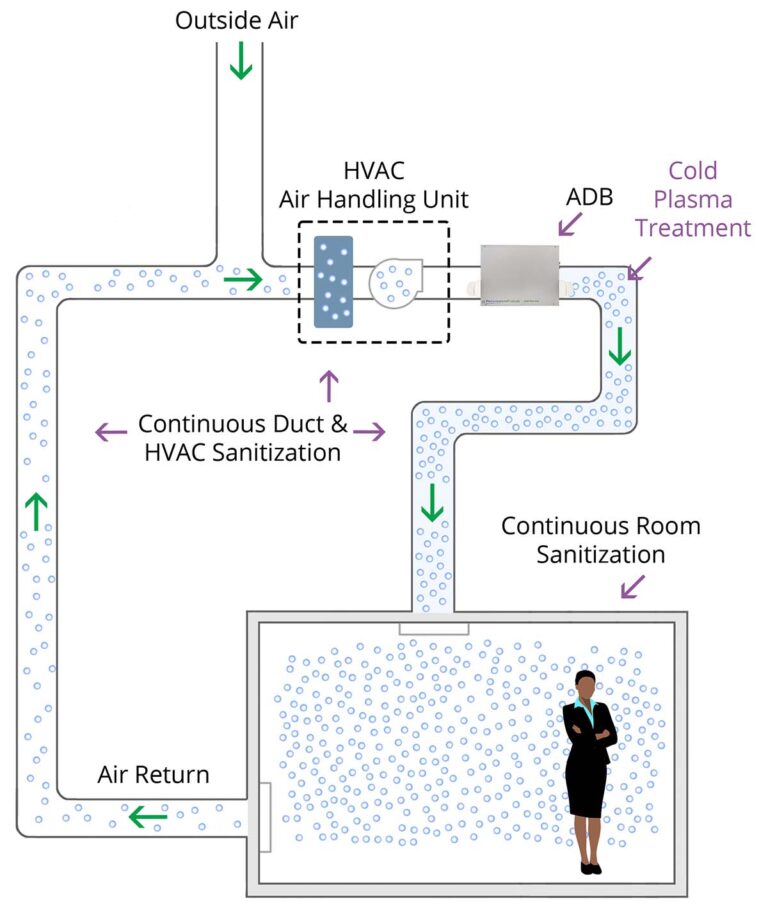
- Ambient air and moisture are drawn into the system.
- Inside the unit, a high-frequency electrical process called Modulated Dielectric Barrier Discharge (non-thermal plasma) breaks molecules down at the atomic level.
- This creates Reactive Oxygen Species (ROS) — highly reactive molecules like hydrogen peroxide (H₂O₂). The non-therm process ensures that ozone is not produced and therefore avoids the hazards associated with this gas.
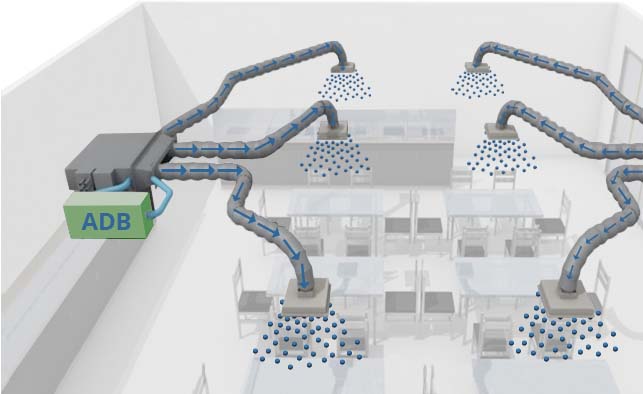
- These ROS are released into the air via the HVAC system or standalone units, where they act as airborne neutralising agents.
- ROS remains active as it is dispersed around the facility, sanitising surfaces from the ceiling to the floor. It is also active in reducing microbial levels on product and packaging.
- ROS molecules damage microbial DNA and RNA, rendering viruses, bacteria, and other pathogens inactive.
What is Reactive Oxygen Species?
Reactive Oxygen Species (ROS) , including:
- Hydrogen Peroxide (H₂O₂) – a powerful, natural antimicrobial agent
- Hydroxyl Radicals (•OH) – among nature’s most reactive oxidisers
- Supeoxide (O₂•−) – destabilizes microbial cell structures
- Singlet Oxygen (¹O₂) – reacts rapidly with organic pollutants
These ROS exist in trace concentrations (30–40 ppb) and are short-lived, making them safe for humans and animals while being highly effective against a wide range of biological and chemical contaminants. They break down pathogens, neutralise gases like ethylene, carboon dioxide, ammonia, and oxidize harmful VOCs.
How is this technology different from other air sterilisers?
MBDB technology is new to Australia and it is unlikely you have experienced it yet. However, there are many technologies that have promised what MDBD can deliver but fallen short of delivering. MDBD is total different to the following technologies;
- UV-C Irradiation
- Bipolar Ionisation
- Photocatalytic Oxidation
In a study by the Mayo Clinic College, most of these technologies failed to achieve even a 1 log reduction in bacteria and viruses in the same time MDBD delivered a 7 log reduction. Ozone wasn’t one ofthe technologies used in this study but some countries have strict regulations on ozone gas emissions to protect public health, especially for vulnerable groups.
When comparing the various methods of pathogen eradication, another very important factor to consider is speed. Speed is critical. If an infected person enters a space and releases SARS-CoV-2 into the air, the speed at which the system inactivates the virus is of the utmost importance, as it limits cross-contamination risks.
ADB technology works much faster than other methods in the market. The Mayo Clinic Study produced 7 log reduction in 1-2 minutes, whilst the other technologies only produced 0.5 Log reduction in this time. The other technologies took 15 to 90 times longer to achieve the same 7 log reduction.
Eco-Friendly
How is Reactive Oxygen Species Eco-Friendly?
- Created from just moisture in the air, no chemicals
- Breaks back down into oxygen and water, no accumulated environmental residues
- Safe for staff to breath during product and actually protects them from disease transmission
- Studies have shown it reduces sick days
- No persistent or toxic chemical residues remain
- No hazards related to chemical concentrates
- Not only sanitises air but continues to reduce microbial loads on surfaces, and has the potential to reduce the use or frequency of surface sanitisers
- Lower energy footprint
- Low power usage – max 54W
- No energy cost in producing chemicals
- No transport costs of chemicals
- Created on demand
- No disposal costs in the disposal of chemicals
Our natural immune system
Our own body’s immune system activates when a microbe is recognised by phagocytes and engulfed, a natural immune response process called respiratory burst is initiated. Much of this process within our own body’s immune response centres around this very reaction of superoxide and water to create H2O2, as well as the reaction of singlet oxygen which, as mentioned earlier, will oxidise many of a microbe’s cellular components. In a way, we are essentially taking this part of our body’s natural immune response to pathogens and bringing it out into our building spaces. Once the reaction is complete, we are left with water vapor and non-reactive O2.
Industries
Our air sanitation systems can be used anywhere where improvements in indoor air quality are needed. It will reduce microbial levels or to remove harmful gases like;
- Volatile Organic Chemicals
- Formaldehyde
- Toluene
- Ethanol
- Hydrogen sulphide
- Benzene
- Ammonia
- Carbon Dioxide
- Volatile Organic Chemicals
Our Reactive Oxygen Species (ROS) will also remove ethylene, a gas that activates ripening of fruit and causes wilting in cut flowers.
This technology delivers its greatest benefits in enclosed or semi-enclosed spaces, where its reactive molecules can circulate effectively—continuously breaking down ethylene gas to slow ripening, destroying airborne and surface pathogens to improve hygiene, reducing mould and odours, and ultimately extending shelf life, preserving quality, and cutting waste without the use of chemicals or costly consumables.
Food Manufacturing
- Reduction of airborne micro-organisms
- Sanitation of all surfaces, from the ceiling to the floor
- Reduction of microbial loads on product surfaces
Agribusiness
- Greenhouses
- Post Harvest Processing
- Poultry sheds – active against Avian Flu
- Hatcheries – increase egg fertility rates and decreases chick mortality
Pharmaceutical
- Clean rooms
- Production areas
- Filling stations
Transport
- Disinfection of transport trucks – kills biosecurity risks
- Extends product shelf life
- Decontaminates trucks between destinations
Healthcare / Aged Care
- Decontaminates rooms
- Minimises cross infection rates
- Reduces the infection rates in patients
- Proven to decrease reduce sicks days
- Suitable for hospitals, nursing homes, clinics and doctor’s offices
Mould Control
- Humid conditions or where condensation occurs are at high risk of moulds.
- ROS neutralises mould spores before they settle
- Kills spores that are on the surface
- Reduces odours and slimes associated with mould and dampness
- Can be integrated into HVAC systems
- Stand-alone systems for cool rooms
Animal Welfare / Shelters
- Reduces transmission of disease between animals
- Improves air quality – reduces CO2 and ammonia levels
- Protect staff and reduces sick days
Office, Retail and Indoor Work Places
- Improves indoor air quality – reduces bacteria & viruses, CO2, VOC
- Reduces air conditioning power consumption
- Reduces sick days and improves staff health
FAQ
- What is Eco-Shield Air and how does it work?
Eco-Shield Air is an advanced, industrial-grade air and surface sanitation system that employs Modulated Dielectric Barrier Discharge (MDBD) non-thermal plasma technology. It continuously generates Reactive Oxygen Species (ROS) from ambient air and humidity, neutralising microbial and chemical contaminants in real time, without chemicals or residues.
System Overview:
- Input: Ambient air + water vapour
- Activation Mechanism: High-voltage, high-frequency current across dielectric barriers generates a cold plasma field
- Output: ROS including Hydroxyl Radicals (•OH), Hydrogen Peroxide (H₂O₂), Superoxide Anions (O₂•⁻), and Singlet Oxygen (¹O₂)
- Delivery: Through HVAC systems or standalone diffusion modules
- Function: ROS rapidly oxidise microbial structures and volatile organic compounds (VOCs), rendering them inactive or inert
- What are Reactive Oxygen Species (ROS) and why are they effective?
ROS are short-lived, high-energy oxidants naturally produced by the human immune system during pathogen attacks (via respiratory burst). In Eco-Shield systems, ROS are generated from ambient water vapour and air via MDBD plasma, acting as powerful sterilising agents.
ROS Species | Mode of Action | Lifetime | Functionality |
•OH (Hydroxyl) | High-reactivity, oxidises all biomolecules | <1 millisecond | Kills bacteria, viruses, spores |
H₂O₂ (Hydrogen Peroxide) | Antimicrobial, oxidises cell walls | Minutes | Effective at low concentrations |
O₂•⁻ (Superoxide) | Inhibits respiration and replication | ~1 second | Disrupts microbial metabolism |
¹O₂ (Singlet Oxygen) | Destroys unsaturated organic compounds (e.g. VOCs) | <1 microsecond | Oxidises chemical pollutants |
All ROS revert to oxygen and water, leaving no persistent residue.
- How does MDBD differ from other air purification technologies?
MDBD cold plasma represents a significant advancement over older or legacy air sanitation systems.
Technology | Time to Achieve 7-log Reduction | Notable Limitations |
MDBD (Eco-Shield) | 1–2 minutes | None – safe, continuous, low-energy |
UV-C Irradiation | >60 minutes | Requires direct exposure, frequent relamping |
Bipolar Ionisation | >90 minutes | May produce ozone or reactive by-products |
Ozone-Based Systems | >60 minutes | Ozone is a regulated respiratory hazard |
Photocatalytic Oxidation | >90 minutes | Limited reactivity under real-world conditions |
MDBD delivers rapid, high-efficacy microbial kill rates without human exposure risks or maintenance burdens.
- What contaminants does Eco-Shield neutralise?
Biological:
- Viruses: Influenza A, SARS-CoV-2 surrogates (Feline Calicivirus)
- Bacteria: Staphylococcus aureus, Klebsiella pneumoniae, MRSA, Pseudomonas aeruginosa, Enterococcus faecium
- Fungi and spores
- Airborne allergens and bioaerosols
Chemical:
- VOCs: Formaldehyde, Benzene, Toluene, Ethanol
- Gases: Ammonia, Hydrogen sulphide, Ethylene, CO₂
- Is Eco-Shield Air safe for humans, animals, and plants?
Yes. The ROS concentrations generated (30–40 ppb of H₂O₂ equivalent) are well below regulatory exposure thresholds:
Agent | Eco-Shield Output | Safe Work Australia TWA | Margin of Safety |
Hydrogen Peroxide | 30–40 ppb | 1 ppm (1,000 ppb) | >96% lower |
The system does not generate ozone, UV light, or harmful by-products. It is safe for use in occupied environments such as food production lines, offices, packaging rooms, and agricultural facilities.
- Is the system validated or certified?
Yes. MDBD technology has been rigorously validated by multiple independent bodies and conforms to international food safety and organic production standards.
Validation Institutions:
- Mayo Clinic & Scientific Air Solutions (comparative study)
- Kansas State University Food Science Institute
- USDA Food Safety and Agricultural Research Service
- Ainia (Spain), Tecnalia (Spain), PUC (Chile), Cesmec (Chile)
- SGS & Intertek
- Approved under the USDA National Organic Program
- Certified for use in EU Organic systems
Clinical Study Results (Mayo Clinic, 2021):
- Airborne Virus: 7.82 log reduction in 1 minute
- Surface Virus: 7.70 log reduction in 15 minutes
- Airborne Bacteria: 7.82 log reduction in 2 minutes
- Surface Bacteria: 7.74 log reduction in 2 minutes
Comparative technologies (UV-C, PCO, BPI) only achieved <1 log in the same time.
- Can Eco-Shield reduce surface contamination too?
Yes. ROS are dispersed as fine, airborne agents that settle onto exposed surfaces, penetrating difficult-to-reach locations (e.g., equipment undersides, ductwork, racking, HVAC interiors). This provides continuous disinfection of both air and surfaces, with no need for manual application or added chemicals.
- How is the system installed and maintained?
Installation Options:
- HVAC-Integrated Modules: For facility-wide deployment
- Standalone Units: Portable or zoned sanitation for high-risk areas
System Attributes:
- Low maintenance: No filters, lamps, or refills
- No consumables: ROS generated on demand
- Remote Monitoring: Optional IoT controls
- Low power consumption: ~0.1–0.3 watts per cubic metre
- Energy footprint per unit: ≤54 watts
- Is Eco-Shield compliant with Australian regulations and food safety standards?
Yes. The system aligns with:
- Safe Work Australia exposure standards
- HACCP and BRCGS protocols
- GFSI-recognised food safety schemes
- ISO/IEC 17025 certified laboratory validations
- Permitted in Certified Organic processing environments
- Permitted in Halal Organic processing environments
- What industries or sectors benefit from this technology?
Eco-Shield Air is highly effective across a broad range of applications:
- Food and Beverage Production
- Meat and Poultry Processing
- Agricultural Facilities and Packhouses
- Pharmaceutical and Biotech Manufacturing
- Hospitals and Aged Care
- Cold Storage and Logistics
- Laboratories and Cleanrooms
- What are the economic and operational benefits?
Operational Efficiencies:
- Continuous pathogen inactivation – no need to halt production for sanitation
- Reduces chemical sanitisers
- Minimises manual labour and water usage
- Reduces product spoilage and cross-contamination
- Enhances regulatory compliance and audit readiness
Return on Investment:
- Fewer employee sick days due to pathogen exposure
- Extended shelf life of perishable goods
- Reduced HVAC demand via enhanced air recirculation
- No need for consumable refills or chemical handling
- Is Eco-Shield part of a broader pathogen control solution?
Yes. Eco-Shield is part of Key Diagnostics’ integrated safety platform, which includes:
- Air Sanitation (MDBD Cold Plasma)
- Water Sanitation – Salt + water electrolysis to generate Hypochlorous Acid (100× stronger than bleach; 7-log kill in 30 sec)
- Real-Time Monitoring – HACCP compliance tools and sensors
- Biofilm Detection – Bactiscan UV-based imaging for surface validation
Benefits
MDBD is an active system that can attack contamination threats 24/7 without the use of chemicals, but is safe for your product, your staff and the planet.
- Highly Effective Microbial Control
- Up to 7 log reduction in 30 seconds
- Active against bacteria, viruses, moulds and spores
- N micro-organism has been found to be resistant
- Destroys harmful gases
- Volatile Organic Chemicals
- Formaldehyde
- Toluene
- Ethanol
- Hydrogen sulphide
- Benzene
- Ammonia
- Carbon Dioxide
- Ethylene
- Volatile Organic Chemicals
- Effective Odour Control
- Safe and Effective
- Safely Use during production – 24/7
- Proven to reduce infections – less sick days
- Fully Automated And Ubiquitous
- Low Maintenance
- No Disruption to Daily Operations
- Total Disinfection Without Adding Staff Hours
- From the floor to the ceiling
- Difficult to reach spaces
- No Chemicals or Residues – only water and oxygen
- No Consumables Required
- Custom-Tailored, Scalable Solutions
- Low Energy Consumption – 0.3 Watts/Cubic Metre
- IoT Control Monitoring Available
- Certified by USDA National Organic Program
- Halal Certified
- Highly Effective Microbial Control
A Greener, Safer Future Starts Now
Eco-Shield ensures comprehensive sanitation – from the farm to the fork.
Join leading food producers switching to a smarter, safer, and more sustainable system. Because when you protect your people, your products, and your planet – you protect your future.